Welcome to the Elite driving school. You are all very welcome. We have one of these evenings occurring across the country, on average, every 7 minutes, such is our popularity. Thank you for bringing your sons and daughters along.
So you might be sitting there, quite smugly, thinking to yourself how clever you have been to get your place this evening. Now, all you have to do is sit back and relax. No. We have standards here at Elite, we don't get a name like "Elite" for no reason. I will not tolerate anyone who abuses the reputation of this driving school. You probably know this already, but let me confirm; pupils who enrol with us pass the driving test, on their first attempt, 99.97%. We are working really hard this year to make that 99.98%. And we need your help, every single one of you, to achieve that goal.
Do you think that we are interested in a national driving test pass rate of 45%? Not in the slightest. It doesn't affect us, because it does not represent us. Do you think we have any interest in the UK % of Grade A driving instructors? Not at all, everyone here at Elite is Grade A. We actually like to consider ourselves A+ actually, and for a good reason. Take me, for example. I used to be a traffic cop for 30 years. I use to drive around in very big, powerful, flashy police cars. I now sit back and live in luxurious surroundings pulling on my not-insignificant pension per week - a pension that I think would make your Dad's eyes water. I use to chase everything, and guess what, I always caught them; but I'm guessing you knew that already. I use to escort VIP's, I was armed, I had so many specialities that frankly, I could spend the rest of tonight, talking about no-one else but me, but that's not why you're here tonight. So rest assured, that the staff here at Elite, are nothing but elite. Grade A? You bet grade A, but you can add a plus to that too.
No, you are here tonight, because we have asked you to attend what is a very important evening with us. It's important because in our vast, and some might say, outstanding experience, we know how important it is for us to set our expectations of you. Each and every one of you. Don't drop your eyes at this point, that shows a sign of weakness. If you don't want to drive round in big flashy cars, knowing that you've passed with the best driving school in the country, there is the exit, and I wish you a good evening. Because I only want the best in this room. I'm not going to achieve 99.98% pass rate by working with a bunch of losers.
We have standards here. You will be passing your driving test the first time, that is going to happen. Mark my words. You will be successful.
Any questions?
A Dad: Hello, Sir, thank you so much for that inspiring talk. I only wish I had this opportunity when I was 17. You've not mentioned anything about road safety, is that something that you kind of, cover?
Mr Elite: I've seen things on those roads that you could not even imagine. There is nothing, absolutely nothing that you, or in fact, any of you out there tonight, could tell me about road safety.
*Gasps* from the audience
A Mum: Hello, oh I must say that this is all very impressive. One thing that I would like to ask is will my daughter be a confident driver?
Mr Elite: Ha ha ha, yes very good.
A Mum: No, what I mean is, having passed the test with you, which I'm sure she will, will she be confident?
Mr Elite: Listen to me Mrs? Never mind. Listen. You don't get where I am, with a driving school like mine that is running across the whole country, with zero confidence. It's all about you knowing that you are buying into something special here. Trust me. I do know what I'm talking about. Our record speaks for itself.
Another Mum: Do you mind if I ask how you do it please?
Mr Elite: Do what?
Another Mum: How you manage to get a first-time pass rate of 99.97%?
Mr Elite: That will be 99.98 after this year let me tell you. There's no room here for complacency. How we do it? Well, we train your son or daughter really hard, that's how we do it. THAT is precisely why, we need your son or daughter to be firing on all cylinders, chomping at the bit, ready to tackle those test routes.
Another Mum: Yes but how?
Mr Elite: Don't you get yourself worrying about detail like that. Let's just say shall we, that no stone will be left unturned for preparing your sons and daughters to be ready for their driving test. What I would encourage you to just think about for a second is, why do you think other driving schools are performing at about 45% when Elite is up at 99.98%? Just think on that for a moment.
*round of applause*
A Dad: Hello, your Highness, do you mind if I just ask? How can I put this? I hope you don't think me weak by asking. I remember when I was 17 I really enjoyed learning to drive, it was actually quite good fun. Is it fun training with you too your Highness?
Mr Elite: Did you pass first time?
A Dad: Sorry?
Mr Elite: When you were 17, did you pass your driving test first time?
A Dad: Oh I see, no, it took me two goes.
Mr Elite:*Pause while staring at the Dad* Thank you. I think that answers that one.
So if there are no more questions, time is money as they say. I have a question for all you sons and daughters. I need a really loud reply to this question: What are you going to do?
A variety of softly spoken answers including "Go home and have fish and chips", "Play Xbox", and "Fuck right off" .
No no no no no no! This will not do! You, are going to *pause* pass *pause* first *pause* time. That's what you are going to do. Now, let me hear you, what you are going to do?
"Pass first time"

Join BIG TOM Driving School Franchise https://drivinginstructortraining.bigtom.org.uk/
Friday, 29 November 2019


Wednesday, 27 November 2019
How's 2019 been for you?
As we approach a broad sweeping bend into advent, I thought now might be a good time to share my thoughts on 2019 in the driving instruction world. ADI's often ask why I bother putting pen to paper on the broad range of subjects that I cover, wondering if I do in fact, 'have a life'. The fact of the matter is, that since I started my blog on 15/11/2011, it has proved to be of excellent therapeutic value to me. I imagine some will scoff at that remark, how can that possibly be true they will undoubtedly say.
I've discovered that the resources that an instructor provide a pupil are just an opportunity to help reach a goal. No-one can force a pupil to engage in resources. We should raise their awareness of the possible benefits for sure, but after that, it comes down to their call. This very point was proved only yesterday with a pupil who was getting herself tied up in knots. Driving instructors will be familiar with the struggles our pupils encounter on the learning path; some of these are painful to observe. It is human nature to allow self-doubt to consume our heads and affect outcomes due to the 'fog' that slowly but surely sits and impedes cognitive thinking. The turnaround that occurred yesterday was entirely due to the systematic application of the resources I provide for my pupils. As pompous as that sounds, there is no other way of describing what occurred. I've personally observed this transformation on so many occasions with pupils now that I can say without hesitation, it is entirely due to the resources. Just because my pupil yesterday had not had the time to read them previously, it didn't stop the two of us reading them at the side of the road. Readers of this blog from many years ago would know I use to have a low opinion of instructors who spend too much time paused at the side of the road. Paused, engaged in this kind of activity though is time very well spent. If you are a reader who likes labels and names for such things, then, in my opinion, it would be metacognition and self-regulated learning. A process of developing knowledge by the use of techniques, to help our pupils think about how they are learning.
It was a while ago when I concluded that we could not "force" learning; we can only help create the environment in which facilitates it. If any readers here don't believe that the act of writing my thoughts and feelings about my instruction experiences in this blog is not therapeutic, so be it, let that be. But it is.
I have never experienced such a good feeling of job satisfaction as I currently do. 2019 has brought its challenges (more on that to follow), but I don't think I can convey to you in this blog, quite the feeling of satisfaction I have in helping my pupils. The more I get to know about the intricacies of this job we do, the more I realise what I did not know. The flip side to this feeling of satisfaction and pride is a deep sense of regret that I may have been able to help many past pupils in a better way. I guess that is the nature of the beast; if you strive to improve in your professional work continually, in doing so, you are more able to recognise your previous limitations. A point not lost on brain surgeons I imagine. But I will go into more detail on this subject later in this blog.
So, buckle up! Settle yourself in and let's take a brief tour of all driving instructor things for 2019.
Making progress
A unique aspect of being a self-employed driving instructor is that on the one hand, you are mindful of the health of your business (revenue vs outgoings). Yet, on the other, you would do well to keep in mind the state of the industry that you are in (road safety statistics).

It would appear that there is a flat-lining effect over the past few years where the DVSA have responded with their 2019 strategy to continue improvement (see previous blogs for more details).

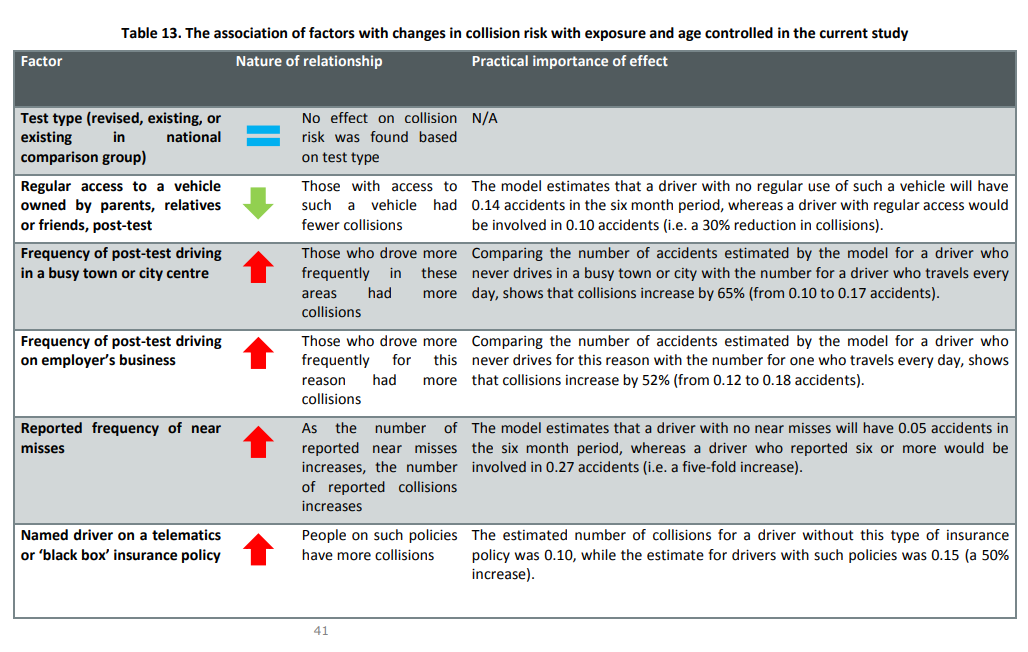
The challenge that every driving instructor wrestles with daily is how to balance the needs of proper quality driving training, with customer needs. What our customers recognise to be their needs do NOT necessarily align with maximising road safety, or for that matter, their learning potential. It is sad to reflect on customers who go through the process of learning to drive, qualify and find that they are ill-equipped for the demands of every day driving. We find ourselves in an industry now that attempts to resolve this fact by the use of 'black box' telematics. We have witnessed a very clever (one could suggest manipulative) strategy from the insurance industry. The implication is the continual (telematics) monitoring of driving behaviour can mitigate poor driving standards. A claim that the DVSA has previously proven through research to be false (see Published Project Report PPR828).
I have discovered that some 17-year-olds are quite literally unable to fully appreciate the responsibilities that come with driving safely on public roads. I think it manifests itself in a variety of different ways: impulsive driving due to influences from peers, imperception of increased risk factors, not recognising the possible consequences of poor driving, a lazy attitude to learning, a desire for immediate gratification. The hope for the outcome is so immense that there is a clouding of judgement regarding meaningful learning.
But before I get too carried away with my teenage character assassination, there is nothing particularly new about the delayed frontal lobe development in teenage males versus females. This fact has not evolved only in the last few decades. There is peer pressure, but hasn't there always been?
I do feel there can be ineluctable differences with the Millenials approach to learning; I wonder how much it hinders them when learning to drive. This multi-tasking that occurs so frequently is baffling to me. I was brought up with the thinking that to concentrate on a task takes focus, no distractions and a clear mind. I see my sons doing homework and revision with earphones in; I increasingly see drivers with earphones in too. My boys will watch the television while using their devices. Single-minded attention while performing a task is old-school. Technology has created an attention-deficit culture which is not conducive to periods concentrating on driving. Perhaps the biggest obstacle that it has created for a learning environment relates to how practised a pupil is listening to information, analysing it and expressing thoughts/feelings. I often observe a complete breakdown in a meaningful conversation due to facile responses. Let me give you an example from one only the other day where I was discussing with a pupil the distance travelled in a second at 20mph. The topic was being able to stop in the distance seen to clear, and we were attempting to understand the necessity for reduced speed and increased attention when passing parked cars in case a pedestrian stepped out between them. It went like this, with the HWC stopping distance table in front of the pupil:
Me: "Can you work out how far the car will travel in a second at 20mph?"
*Pause for much thought*
"Nine hundred."
"Nine hundred what?"
"Metres"
"Really? Are you sure?"
*Pause for thought*
"Yes"
"So you are suggesting that a car will travel 900 metres in a second at 20 mph?"
"Uhm..."
I'm not saying that I know enough on the subject to say that this error is due to inattention, but it does demonstrate a severe lack of meaningfulness. How practised are our younger folk at analysis and understanding? Listen carefully, think deeply, check and verbalise the response. I do wonder how over-exposure to technology contributes to a lack of practice.
A subject that I have mentioned previously in my blog is this culture in schools of superficial learning of keywords to regurgitate in a test, that has no bearing on context, perspective, application or knowledge. You get these answers that are meaningless to the question, perhaps incoherent and show no depth of understanding. I don't think this approach to learning helps in any way when we are attempting to relate about a practical skill.
Much is affected by the attitude our pupil has to the process of learning to drive. The author Alain de Botton recently remarked "If you expect to succeed, you will almost certainly fail" which is an interesting take on the subject. It is most regrettable when a pupil has grossly under-estimated the task of learning to drive; the autodidact has a rude awakening of the difficulties that lay ahead. It would be naive to think that all pupils arrive for driving training with a perfect alignment of expectations and understanding for the instructor-pupil working relationship. But much can be done with effective communication to help develop constructive bonding. When there is a breakdown of the relationship, it can often be rooted in the decision of when to take the driving test. The dissonant opinions of the instructor and pupil will test the most established of a working relationship. I have blogged, vlogged and spoken much on the subject. Newly qualified teachers will no doubt struggle with setting expectations as they start their career, and I am in no doubt it is common for recently qualified ADI's too.
One of the particular challenges for ADI's in these days of social media is the obloquy that can arise simply by an ADI who has safety standards at the forefront of their mind. The byzantine tactics being used by some members of the public in these situations begin to justify why some ADI's will put aside their professional judgement for the sake of their reputation. Irrational responses to feedback can be a problem. Whether it be towards a pupil who then implodes with the perception of being an utter failure, or sometimes the reaction from parents is unhelpful. Parents will often compare what their son/daughter is doing to how they learned to drive and might be confused by differences. But helicopter parenting is tricky when an instructor is attempting to raise standards. The fragility of mental health in teenagers is relatively new. I've only been working in the industry for ten years, and even I can detect a difference over that period. It's troubling because driving instructors are merely attempting to ensure a pupil is safe on the roads. But learning to drive does sometimes involve digging deep and working hard; part of the process of improvement does necessitate constructively working with feedback from an instructor. If a pupil crumbles into a heap of self-loathing on receipt of some good quality, formative feedback, then it does leave you wondering if they have the necessary maturity for the task in hand. I get the general impression (I could be well off the mark here) that some of our 17-year-olds appear to be struggling to cope with the stresses and strains of modern-day living. The perception of feedback is aggression or undermining. It comes across as a very fragile mental health perspective, where feedback is undoubtedly questioning their right to drive. One of my sons relayed to me recently a snippet of information that he had heard and he was asking for my thoughts. It went along the lines of how GCSE exam grades can have a sliding scale of additional points on offer depending on the circumstances in which the exam is taking place in the student's life. Family grief, the death of a pet, break up of parents, financial hardship, not feeling very well and on it goes. Whatever my thoughts, the fact is these rumours are even doing the rounds! According to a recent article in The Times, 26% of children at private schools are being awarded extra time in exams on grounds of health/special educational needs - compared to 17% at non-selective state schools. Food for thought.
Just in my adult lifetime, there have been a few signposts along the way that may begin to explain what is happening. I recall attending a primary school as a parent governor, and being struck by all the wall displays that explained all of the rights the students had. I won't repeat the detail, but the message was clear. No mention of responsibilities, just rights. I remember the first time when attending a primary school sports day; there were no losers. Everyone was a winner. It's almost as if there can be no failure, hardly preparing our youngsters for adult life. Just look at how younger pupils of ours respond to driving test fails: it's truly devastating and unjust because the CAUSE of the failure had nothing to do with them. The result was related to another road user, the weather, the time of day, the examiner, the sat nav, the quota of pass/fails. If you keep telling young minds that there is no such thing as failing, then they have no experience of failing and recovering from a setback. When I listen to some of my pupils talk about stress, it often involves their ability to manage adversity. Mock test results, relationship breakdowns, pets dying. When schools place a heavy burden on homework and revision at home, they feed this sense of impending doom. I can only imagine it must be a thoroughly miserable existence. They are continuously bombarded, in every academic year with tests which are supposed to be preparing them for the final exams. So there is this very high expectation from teachers for success (one might even use the word 'demand' these days), failure is not an option. Look at all these tests that we have prepared for you over the last five years; you better make sure you nail these exams. It's like a 'Step by step guide how to damage mental health' by insisting upon unrealistic demands.
Our industry is currently pondering on why theory test pass rates are as low as they are. As I say, I could be way off the mark here, but I think you will find theory tests come low in priorities in the workload of your average 17-year-old. We are creating 'pressure pots' of stressed teenagers who know there are high expectations but have no idea what it is to fail. You imagine living your life like that and see how that starts to affect your outlook.
I recall speaking to a Mum on the phone recently. Her daughter has high anxiety levels due to an event which neither Mum nor pupil cares to disclose. The driving behaviour of her daughter is inconsistent, erratic and progress is flat-lining. There is nothing about the situation which is anything particularly unusual, on the face of it. Typically, if I demonstrate that what I'm attempting to develop in my pupil is technically sound, as per the DVSA driving standard, then all is good in the world. But all is not good in the world for this pupil, and she is not slow in letting me know she has no time for my contribution. Everything that comes out of my mouth is beneath her. Taking the emotion out of the situation and showing this pupil the same message via DVSA publications makes no odds. This pupil won't even look at the publications.
She is consumed in self-doubt, expressing feelings of hopelessness. She can't hear my advice on a technical or metacognitive level, because there is too much 'noise' distracting her. You could say the red mist is truly fogging up any rational thoughts. Her emotional state of mind is busily telling her how useless she is and how she may as well give up. It is very, very sad to observe, and not at all unusual. Mum tells me that her daughter does, in general, tend to focus on negatives. You see, it often comes down to learning to deal, manage, cope with adversity. All of this wrapping young folk up in cotton wool is not helping them. Life is hard, a struggle, often cruel, with the odd addition of unjust at times. It can be miserable, some might even say at times unbearable, but we learn to plod on, recognise our weaknesses and make our way through life. Beautiful sunshine at times gives way to being dark, wet, bitterly cold and downright miserable - but hey, that is life.
One particular disappointment for me personally in 2019 is the quality of some CPD I attended on Safeguarding. I blogged on it at the time. It's a great shame as there are so many opportunities to provide proper, meaningful support for ADI's. I am a regular listener of the DIPOD podcast as well as a member of one of the driving associations and can see how poor the CPD choices are for ADI's. I haven't seen the latest statistics on retention in the industry. Still, having attended a safeguarding course mid-2019, I do find myself less inclined to participate in such activity. A generous description would be 'unprofessional'; let's leave it at that. On the subject of resources, the new 'Official DVSA guide to learning to drive' book came out on 23/10/19 and is available on Amazon for £7.19. It's an excellent guide, and the updates are good to see. My only gripe is with repeated reference made to 'The Driver's Record'. Not only is there a mismatch of the 'five levels' mentioned in the book (pg 14) as against the > online version of the driver's record < but the graphic shown within the book (pg 169) does not even exist! But as I've mentioned before in this blog, all publications from the DVSA should be purchased by ADI's, and I can see no reason why ADI's shouldn't be buying a copy of this book for their pupils. At £7 it is a small price to pay for a handy guide to pupils and accompanying drivers. DES has also been updated near the end of 2019 and while I would always recommend the latest versions, the updates in this are less significant.
There may be some more news coming to us in December 2019. There was talk a couple of years ago about a review of the SatNav TomTom model for driving tests - a change for an improved device would get my vote. I believe there is an update to the driving standard coming our way.
Happy training folks.
Friday, 1 November 2019
What is a meaningful job?
It is not easy to relay what is involved in being a driving instructor because often the person you speak to has a distinct perception of the job. I sometimes find myself talking to a prospective PDI but wondering how much of what I say is being heard and understood.
It seems so easy.
We all know how to drive; what can be so hard in telling pupils how to copy what we do?
Indeed, speaking in those terms, for many pupils that tactic will suffice. It is a gross dumbing down of the service that a professional driving instructor provides, but as parents have been observing for decades, it will kind of 'get them going' so to speak.
The treasure lies beneath, as is often the way in life. Alain de Botton remarked at a recent conference (Founders Pledge Forum 2019) that a meaningful job is one in which:
for another human being.
The effort of your labours makes a genuine difference to someone's life.
Driving instructors will often recall a particularly challenging pupil and the satisfaction gained by helping that person achieve their goal. The fact of the matter is, despite how people might de-value the art of learning, people's ability to learn to drive varies considerably. It can be incredibly challenging for some. How much suffering these particular people go through as they learn to drive, I think, speaks volumes about the skill of their instructor.
If you have the emotional intelligence to recognise that what you find so natural and comfortable to accomplish is not necessarily felt by others, then BIG TOM wants to hear from you! It is an art to develop ability in pupils who through no fault of their own, struggle.
It seems so easy.
We all know how to drive; what can be so hard in telling pupils how to copy what we do?
Indeed, speaking in those terms, for many pupils that tactic will suffice. It is a gross dumbing down of the service that a professional driving instructor provides, but as parents have been observing for decades, it will kind of 'get them going' so to speak.
The treasure lies beneath, as is often the way in life. Alain de Botton remarked at a recent conference (Founders Pledge Forum 2019) that a meaningful job is one in which:
you reduce suffering or
increase pleasure
The effort of your labours makes a genuine difference to someone's life.
Driving instructors will often recall a particularly challenging pupil and the satisfaction gained by helping that person achieve their goal. The fact of the matter is, despite how people might de-value the art of learning, people's ability to learn to drive varies considerably. It can be incredibly challenging for some. How much suffering these particular people go through as they learn to drive, I think, speaks volumes about the skill of their instructor.
If you have the emotional intelligence to recognise that what you find so natural and comfortable to accomplish is not necessarily felt by others, then BIG TOM wants to hear from you! It is an art to develop ability in pupils who through no fault of their own, struggle.
Thursday, 24 October 2019
If there is a God.....

It is not uncommon to see tailgaters on the roads. Many drivers drive too close to the vehicle in front without even realising it. But what my pupil suffered from yesterday went quite a bit beyond how we should all reasonably expect drivers to behave.
Having hit us from behind as my pupil was attempting to navigate around a left bend, the taxi driver started to plead his innocence in broken English. I couldn't fully understand his point but got the gist that he considered the standard of his driving to be more than satisfactory.
What he then does is immediately get on his phone and is I presume 'taking advice' in a foreign language. Getting his name, address and mobile number proved to be incredibly difficult. This problem, coupled with the fact that this taxi was being driven around with an illegal front tyre, I called the police. The operator asked me to pass the phone to him, and suddenly there was an amazing improvement in this man's ability to speak English. Miraculous. When the call ends, he begrudgingly shows me his taxi badge. I now know the guy's name and quickly followed by a magical recall of a digit in his phone number hitherto omitted.
I honestly don't know why this has to be so difficult.
There is a law about standards of driving; tailgating is in the Highway Code. Highways England summarise it as follows:
We associate tailgating with aggressive, 'own the road' speed-merchants, trying to intimidate other drivers to get out of their way. ... The Highway Code says you should “allow at least a two-second gap between you and the vehicle in front on roads carrying faster-moving traffic”.
Having observed this chap's road skills for about 3 minutes before the accident, that seems to me to be a reasonable representation of his driving behaviour. How long he has been driving a taxi around in Peterborough in this manner, I have no idea.
About a year ago, returning by train from a West End show my family were subjected to a taxi ride that included equally appalling driving of cutting vehicles up when changing lane, faulty car lights and a fuel stop, yes we actually stopped for fuel. When I reported that to Peterborough City Council the reply I received stated that I really should be grateful for the offer of a discounted rate on a future journey. Hmmmmm..... I thought..... interesting. Noted.
But driving ability aside, in this country, there is an expectation that the vehicle you drive on a public road, is roadworthy. The integrity of the tyres is most certainly included. Let's cut this guy some slack on that one, as at the time of the accident I called the police to report the state of his tyre (see image above), I thought it might be kind of relevant given the fact that he has just failed to prevent his vehicle from smashing into the back of mine. But no. It appears that a moving traffic offence such as this does not warrant the police attending. Let's just hope that some young child doesn't fall victim to this vehicle's inability to stop.
So let's ignore the driving standard, the illegal tyre, the inability to speak English to exchange particulars. But I'm not sure why we had to endure the laughing. Laughing at the fact that he has just caused:
- my pupil's confidence to be severely affected
- me to see my doctor for a back injury
- my driving school car to be replaced with a courtesy car
- the rest of my day to be consumed in reporting and gathering evidence (big thanks go to the member of the public who witnessed and contacted my driving school to share her dashcam)
- even with no blame, some kind of adverse effect on my insurance premiums
- my loss of earnings while waiting for the replacement vehicle
Ignorance of the law, reckless driving, giving inaccurate details and just to top it off, laughing at us.
Surely, please someone tell me, surely, there should be some kind of formal accountability served out to this guy? Please let that be so.
Friday, 18 October 2019
Five honest, brave souls
I did my yearly road safety talk yesterday. This time it was in a different grammar school to normal.
I started by outlining to the 100 Year 12's the difference between learning to drive to the DVSA driving standard and learning to drive to pass the driving test.
I asked for a show of hands for who would prefer to be taught to pass the driving test only.
Five honest, brave souls raised their hands.
I started by outlining to the 100 Year 12's the difference between learning to drive to the DVSA driving standard and learning to drive to pass the driving test.
I asked for a show of hands for who would prefer to be taught to pass the driving test only.
Five honest, brave souls raised their hands.
Tuesday, 15 October 2019
Why does the DVSA grade driving instructors?

Is this for the benefit of the public or the DVSA?
One might respond with the word 'standards'. Protects the public by maintaining standards; ensures high standards of teaching; encourages driving instructors to keep their standards sharp — that kind of thing.
Does it?
This blog is going to discuss the possible reasons why a driving instructors grade, as given by the DVSA, can be entirely misleading. Firstly, let's put some context to this desire to measure performance in education.
We hear the UK government regularly sharing the increasing numbers of schools being either 'good' or 'outstanding'. Is that also aimed at maintaining standards and protecting the public? The Sutton Trust recently stated that: "27% of secondary school children in England and Wales have had private tutoring, up from 18% in 2005. In London, the proportion is 41%. Children from BAME backgrounds are almost twice as likely to have had tutoring as white children". It would appear that a growing proportion of parents who have children going to London secondary schools have little faith in the Government's claims of higher standards. The Children's Commissioner recently stated: "20% of children in England leave school without having achieved 5 GCSE's A* - C (or equivalent)". The latest results from the Programme for International Student Assessment puts the UK in 15th position of 70 other countries for science, 22nd for reading and 27th for maths; hardly a ringing endorsement of UK achievement. I eagerly await the 2018 results due out on 03/12/2019.
It begs the question of why sane and rational people with good intention are placing so much weight upon the assessments given from OFSTED. Parents, businesses and global comparisons are turning their back on UK state education. Heads can call themselves "outstanding" if OFSTED authorises it, but it is not fooling anyone who takes an interest in these matters. Many (not all) Heads have lost their professional judgement, which they have gained over years of experience. Educational shibboleths set in times when 'education' had meaning to it are abandoned, replaced with OFSTED metrics that plunder young minds into a state of high anxiety.*
Schools busy themselves with statistical tinkering and "curriculum alignment", no stone is left unturned to maximise data targets. Strategic techniques of creaming, gaming and teaching to the test, run riot in the quest for being referred to as outstanding. The objective of OFSTED is: "Ofsted's role is to make sure that organisations providing education, training and care services in England do so to a high standard for children and students". OFSTED's understanding of a 'high standard' of education is at odds with many other organisations.
If standardised performance measures manage organisations don't be too surprised if the resulting decisions and behaviours of staff lose sight of their fundamental purpose. Policing, health and education regularly demonstrate this to us all daily. Are we treating patients with dignity by insisting they wait outside a hospital in an ambulance so that the 4-hour wait target in A&E can be maintained? When a DVSA examiner wants to see me teaching a 62-year-old pupil in the same way that I teach a 17-year-old pupil (see the previous blog). Professionals conduct themselves in a manner befitting of the experience and knowledge they have acquired through hours upon hours of a dedicated application. They will not take kindly to assessment criteria that are intolerant of nuance, precision and integrity.
So why exactly are the DVSA grading driving instructors? Measuring instructor performance to protect the public is a worthy cause; identifying poor performers or even misconduct is undoubtedly respectable. But attempting to distinguish between "sufficient competence" and "high overall standard of instruction" is recognised globally as a step too far for standardised metrics. Not only does it invite (encourage even) gaming, but in a 1:1 assessment, it is liable to corrupt examiners with fraudulent motives.
I recall an ADI NJC webinar from 24/04/2017 where DVSA representatives explained the rationale for proposed changes to the Part 3 and Standards Check assessments. Scorn of a "testcentric" mentality whereby PDI's were wrongfully learning what to teach for a test rather than how to teach. And yet, I have personally experienced first-hand strategic gaming on those tests from an examiner. For example, requiring me to teach reverse parallel parking to a role-played pupil in an entirely inappropriate location. Or allowing personal skills and techniques to unrealistically role-play a pupil and affect assessment incorrectly. Or deliberately starting an assessment late to reduce the opportunity to demonstrate competence. Or intentionally unsettling a candidate by displaying unrealistic standards of driving. These are the antics I have witnessed from just one driving examiner of the old and new standards checks and part 3 tests.
How many incorrectly conducted driving tests have been exposed by a driving instructor observing the test? I've exposed 2 in the last 2 years that were agreed to have been unfair. You imagine for a moment how many would be exposed if all 40,000 instructors observed every single test? Is anybody holding the performance of driving examiners to account? If so, what are the yearly figures for this occurrence?
The aim of the standards check is to let an examiner assess an ADI’s ability to instruct and whether their instruction helps a person to learn in an effective way. Taking into account the fact that the examiner does not ask any questions of the pupil at all, I wonder how qualified they are to make that assessment. There is a complexity involved in developing learning that goes beyond whether an instructor demonstrates 75 pre-defined elements of competency in a 45-minute assessment. It is precisely this approach to a standardised teaching approach that creates a national pass rate of 45%. A 'one size fits all' methodology that has no time for pupils with learning difficulties, disabilities, elderly or unengaged pupils. To demonstrate to the DVSA that the driving instructor has a "high overall standard of instruction", all 75 elements of competency must be demonstrated within the allotted time no matter what type of pupil they bring to the assessment. Standardised performance measures are limited in the ability to recognise subtlety. Unqualified or corrupt examiners suffer the same handicap. Measuring the effectiveness to help a person learn is not achieved by insisting that a pre-defined list of criteria is 'covered' within a fixed timescale. That is a gross dumbing down of the art of teaching a vital life skill which affects road safety.
* Further reading: Select Committee on Children, Schools and Families Third Report Conclusions and recommendations
* Further reading: Select Committee on Children, Schools and Families Third Report Conclusions and recommendations
Subscribe to:
Posts (Atom)